
Aluminum foil identification & instruction plates
MIL-DTL-19834 adhesive-backed foil plates
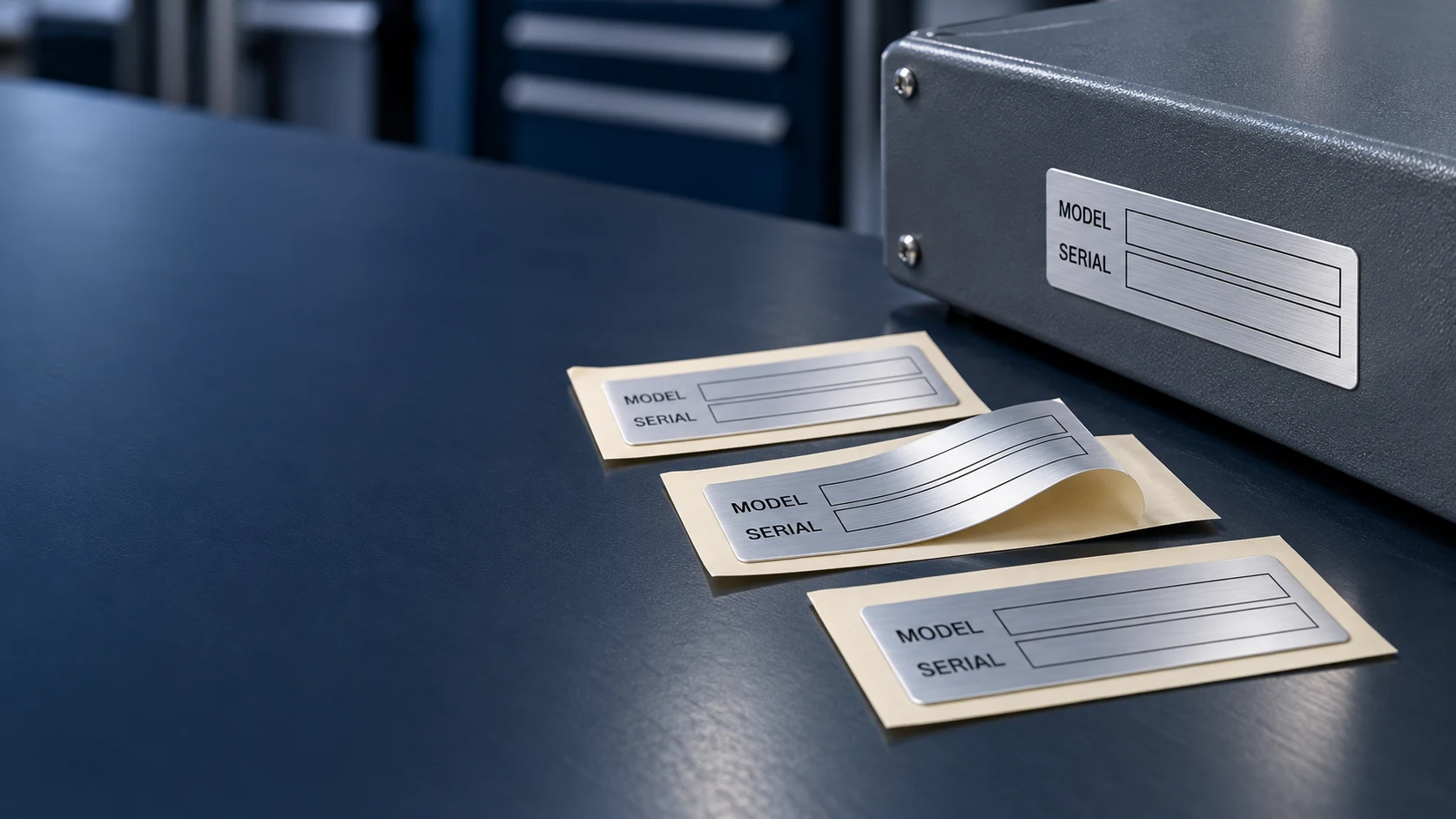
PIC supplies adhesive-backed metal foil plates for equipment identification and instructions. These thin aluminum plates carry text, diagrams and serial information while adding very little thickness. Your MIL-DTL-19834C drawing is the starting point for discussing the required marking and adhesive.
Thin metal identification plates with adhesive backing.
Equipment identification • PIC
MIL-DTL-19834C
Thin aluminum identification
MIL-DTL-19834C aluminum foil plates
Foil plates provide equipment identification and operating instructions where a thin, bonded metal plate is needed. MIL-DTL-19834C covers plates for both internal and external equipment applications.
The specification calls for high-grade 1100 aluminum alloy, 0.003 inch thick with a tolerance of ±0.0005 inch, excluding the backing. A polyester or polycarbonate label is a different material, and the foil is thinner than the Type H plates required by MIL-DTL-15024G.
The marking, adhesive and surface finish are part of the finished plate’s requirements. Matching the alloy or thickness alone does not establish conformance.
The layers of a foil plate
Marking & finish
Text and graphics on the face
Aluminum foil
1100 alloy at the specified thickness
Adhesive
Type I or Type II, as specified
Protective backing
Removed before application
Simplified foil-plate construction; layers are not shown to scale.
Type I & Type II adhesives
Choose the specified adhesive for your foil plate
Type I
Pressure-sensitive adhesive
Remove the protective liner and apply pressure to bond the plate to the prepared surface. The liner is removable; that does not mean the installed plate is designed to peel away cleanly later.
Type II
Solvent-activated adhesive
Solvent activates the adhesive film before application. If your drawing requires Type II, PIC needs to review availability and the specified application procedure. A pressure-sensitive plate is not an automatic substitute.
Section 6.1 favors Type I for Navy use and requires procuring-activity approval for Type II. It also restricts certain Air Force electronic test-equipment applications, so those uses require review against the specification.
Adhesive mounting
A foil plate needs a suitable equipment surface
The material the plate will attach to, including any paint or coating, helps PIC assess the application. The specification discusses smooth surfaces such as metal, phenolic and glass. Surface preparation, application pressure and the time before use affect the adhesive bond.
A painted housing and bare aluminum can present different bonding conditions. A surface photo and application details help us review the plate for your equipment.
The specification includes finished-plate test exposures at −55°C and +105°C. Those are test conditions, rather than a general adhesive service-temperature rating. An adhesive datasheet alone cannot establish whether the complete plate passes or fails the required tests.
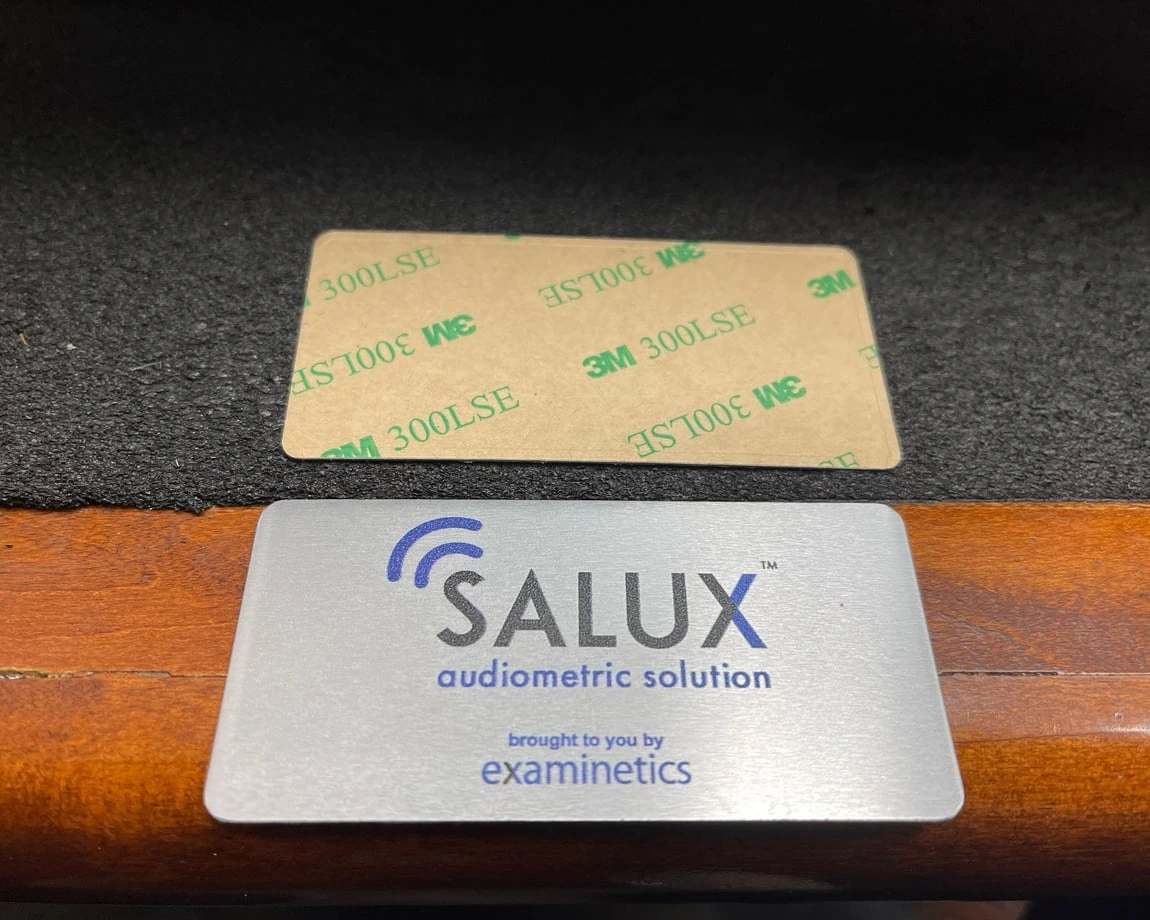
A PIC nameplate shown beside its adhesive-lined reverse.
What affects the adhesive bond?
01 • Surface
Material, coating and cleanliness
02 • Application
Pressure and time before use
03 • Use
Temperature, fluids and abrasion
The plate, adhesive and equipment surface all contribute to the bond.
Custom legends & finishes
Foil identification plates, instruction plates and blanks
PIC offers metal imaging, screen printing, cutting and adhesive lamination for identification work. We review the specific foil and adhesive with your drawing to confirm the production method for the order.
Your plate can carry equipment identification text, an instruction diagram or variable serial information. Areas that must remain clear are part of the layout, whether you need finished printed plates or blanks for later marking.
Dimensions, colors and the required finish are part of the drawing. If it calls for a glossy or nonspecular finish, that requirement remains part of the order; a nonspecular surface limits mirror-like reflections.
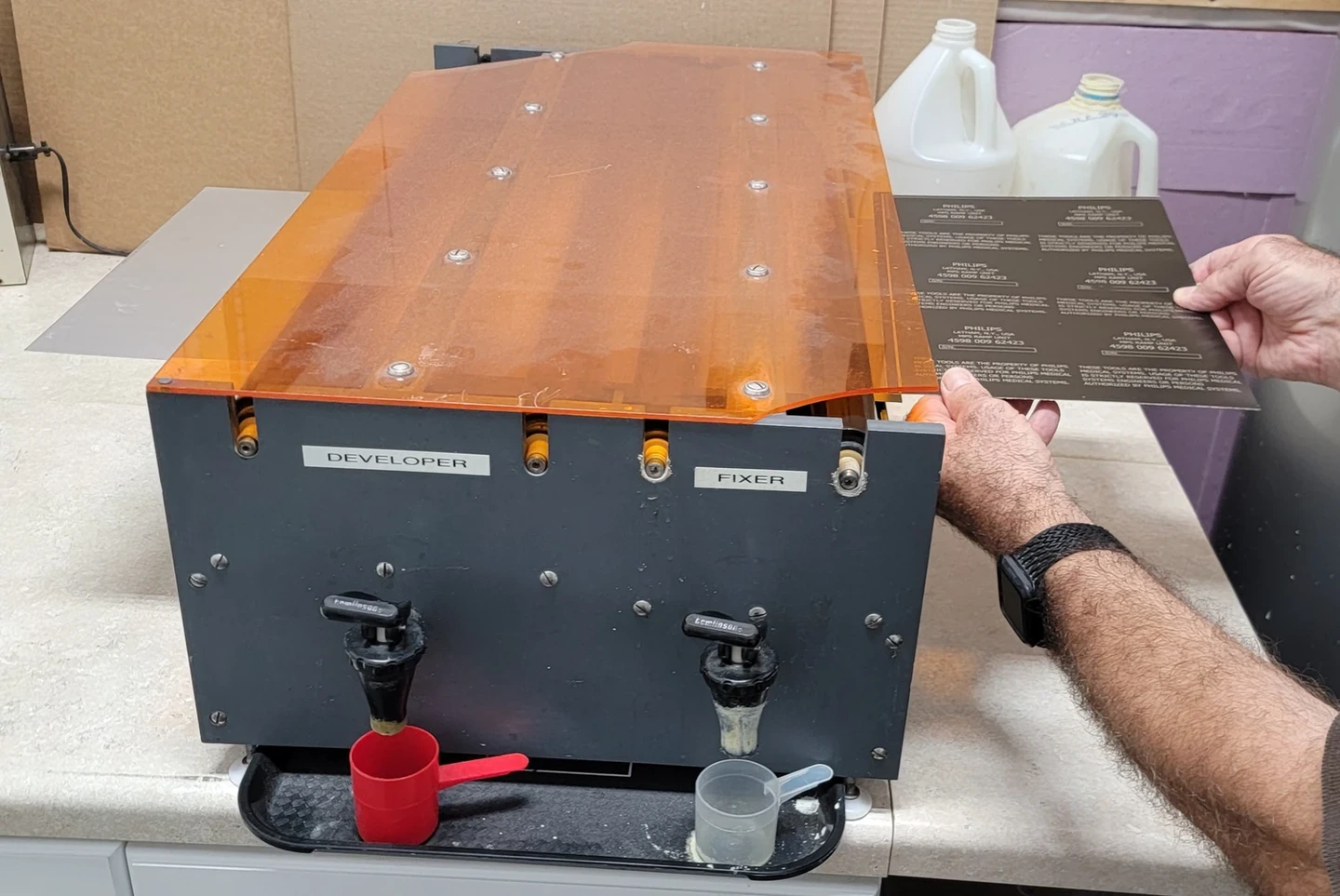
PIC processes metal identification graphics in-house.
Finished-plate inspection
Inspection requirements for MIL-DTL-19834 foil plates
The inspections and records required for your order are part of PIC's project review. MIL-DTL-19834 has its own conformance sampling and examination requirements, with first-article inspection when specified.
Marking and finish
Inspection considers the finished marking, surface finish and resistance to abrasion. The information must meet the specification’s legibility requirements.
Adhesion and exposure
The specification addresses adhesion, temperature cycling and exposure to water, fuel and cleaning materials. These requirements apply to the finished plate.
Reports and records
A raw-material certificate does not replace finished-plate inspection. PIC reviews the requested test reports, inspection records and other documents before accepting those commitments.
Current specification & legacy references
MIL-DTL-19834C is active; QPL-19834 was canceled
DLA lists MIL-DTL-19834C with Amendment 2, dated April 1, 2022, as active. The separate QPL-19834 qualified products list was canceled on August 19, 2003. That cancellation did not cancel the specification and does not establish a supplier’s qualification.
An older MIL-P-19834 designation or a particular revision on your drawing is part of the inquiry. The responsible engineering or contracting authority must resolve any proposed change to the contract requirement.
Work with PIC
Start your adhesive-backed foil plate project
Useful details for a foil-plate quote include:
- Your drawing, adhesive type and artwork
- Quantity
- The surface where the plate will be applied
- Temperatures, fluids or cleaning conditions the plate will encounter
Other quote details include:
- Blanks or finished plates
- The required finish
- Any first-article inspection or documentation
PIC will review the specified foil plate for your application.