
Equipment nameplates & photosensitive aluminum
MIL-DTL-15024 nameplates & identification tags
PIC makes custom nameplates and identification tags for equipment ratings, operating instructions and serial data. Our Metalphoto processing, printing and finishing services support projects with MIL-DTL-15024 requirements, including drawings that still call for Revision F.
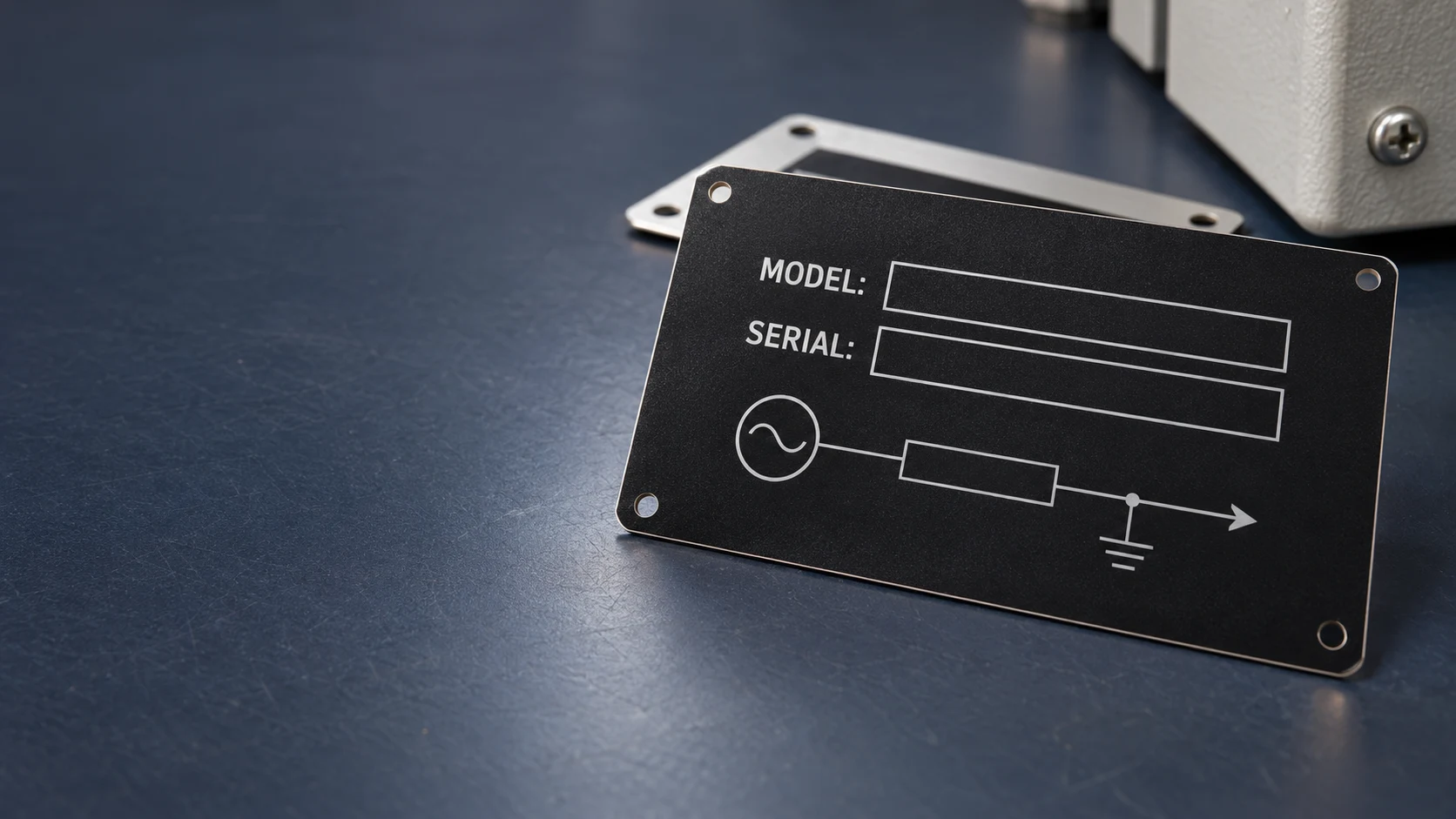
Equipment information, diagrams and mounting holes on one identification plate.
Equipment identification • PIC
MIL-DTL-15024F
On this page
MIL-DTL-15024F & G
Nameplates for drawings that specify Revision F or G
The revision required by your drawing or contract is the starting point for PIC's review. MIL-DTL-15024F dates to 1997. The current DLA record lists Revision G, issued in 2018 and validated in December 2022. That validation did not create a new revision letter.
The differences can affect your part. Revision F includes Type K1 and K2 cable bands; G does not list those types. G adds digital printing and sublimation to Type E and adhesive-backed vinyl and polyester to Type G.
Type H photosensitive aluminum also has different thickness requirements, shown below. Any change from the specified revision needs approval from the responsible engineering or contracting authority.
| Revision | Required thickness |
|---|---|
| F | At least 0.020 inch for mechanical attachment; 0.012–0.025 inch for adhesive attachment. |
| G | At least 0.020 inch. The adhesive-mounted range from F does not apply. |
These examples highlight differences that affect nameplate selection. Use the full applicable specification and drawing for the order.
Nameplate marking methods
MIL-DTL-15024 types: printed, engraved and photosensitive plates
The type letter identifies how a plate or tag is made or marked. It does not rank its quality. PIC offers Metalphoto processing, printing, engraving and finishing; we review the specified type and material before confirming a project.
| Type | Method or construction | What it means for the part |
|---|---|---|
| A | Chemical etching | The marking is formed by chemical etching. |
| B | Mechanical engraving | The marking is cut into the surface mechanically. |
| C | Stamping | The marking is impressed into the material. |
| D | Casting | The marking is formed as part of a cast plate. |
| E | Surface printing | Printed plates are intended for protected areas. G includes digital printing and sublimation. |
| F | Laminated printing | Printed information is enclosed between transparent nonmetallic layers. |
| G | Adhesive-backed foil, vinyl or polyester | The drawing and referenced material specification determine the required construction. |
| H | Photosensitive anodized aluminum | A silver-based image is formed within the anodized surface and then sealed. |
| J | Tags | The identification is supplied as a tag under the specified requirements. |
| L | Laser-generated marking | Classes depend on the substrate and coating. Laser cutting a part is different from laser marking it. |
This table describes specification types. It is not a list of every construction PIC supplies; cast plates and other specialized requirements need a specific availability review.
Metalphoto at PIC
Type H photosensitive aluminum nameplates
PIC processes and seals Metalphoto aluminum in-house for detailed equipment identification. The process reproduces fine text, line diagrams, serial numbers and barcode graphics.
Photosensitive anodized aluminum uses a silver-based image within the anodized surface. Sealing follows processing. This is the marking method described by Type H, with the required plate thickness determined by the applicable revision.
For Revision G, Type H material must be at least 0.020 inch thick. A 0.003-inch foil label is a different construction, even when it carries similar information. Barcode quality verification, if required, is a separate requirement in the order.
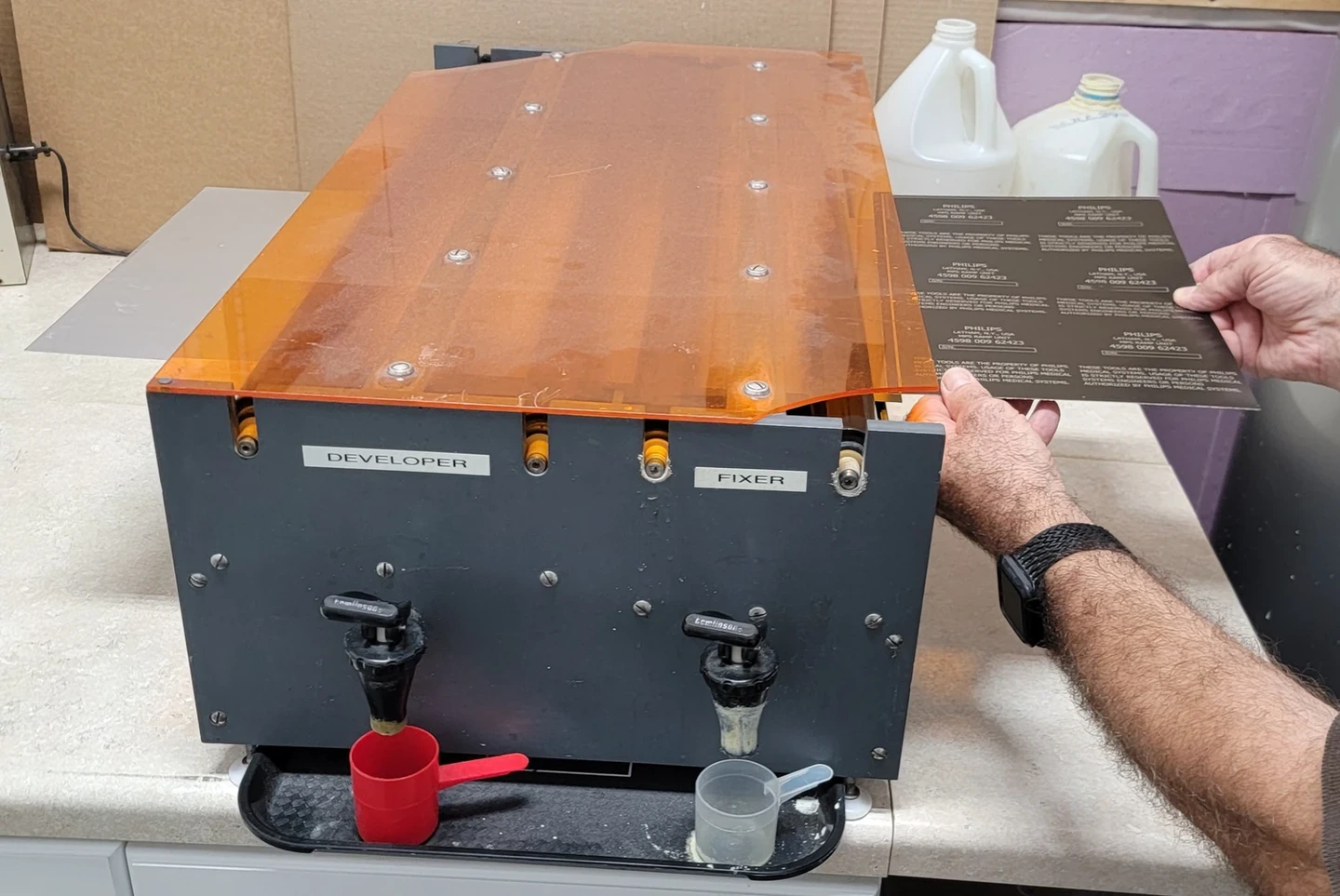
A sheet of nameplates in PIC’s Metalphoto process.
Cutting, holes & attachment
Nameplate finishing for holes, adhesive and serial fields
PIC cuts nameplates, adds mounting holes, applies adhesive backing and stamps numbers. We use your drawing to locate those features and preserve room for the printed information.
Keep fasteners clear of important text and diagrams, and identify any blank fields that will be completed later. The material, thickness, dimensions and attachment all need to fit the installation.
Under MIL-DTL-15024G section 3.4.4, plates intended for adhesive mounting must not have mounting holes. A conflicting drawing needs to be resolved before production. For mechanically mounted plates, the equipment surface and fasteners also need to be considered for possible dissimilar-metal corrosion.
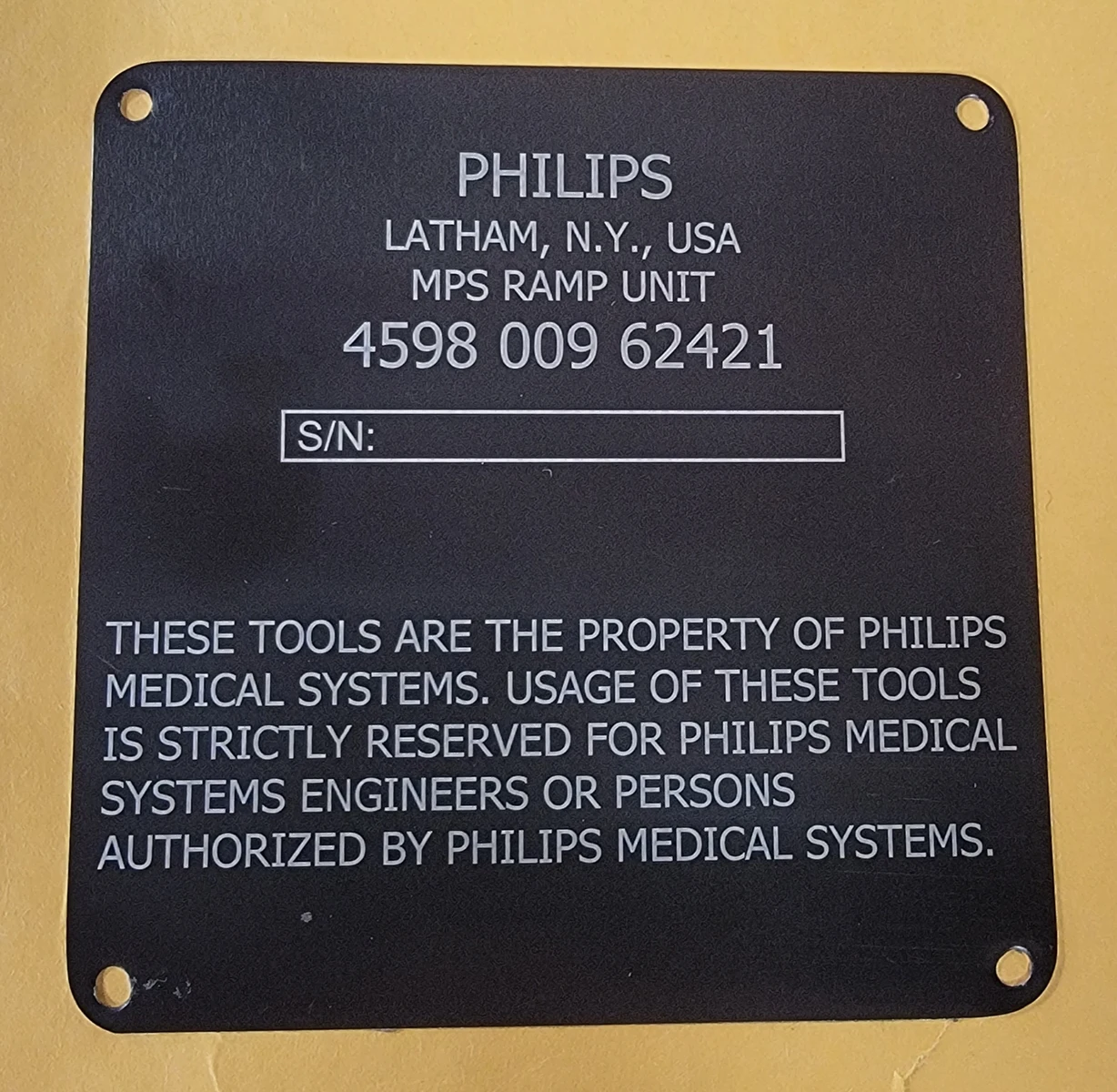
A nameplate with holes positioned at the corners.
Keep mounting holes clear of the information
Locate holes from the drawing
Leave space for fasteners
Keep text and diagrams clear
Identify fields for later marking
Example of a mechanically mounted plate. Hole locations and dimensions come from the drawing.
Inspection for your order
MIL-DTL-15024 inspection and documentation requirements
Inspection and documentation requirements are part of PIC's review of the drawing and nameplate project. The finished marked item is the basis for acceptance, including its material, marking and attachment.
MIL-DTL-15024G section 4.1.2 distinguishes meeting the specification requirements from performing the tests: testing is required when called for in the acquisition documents. This provision applies to Revision G and should not be assumed for another specification.
Adhesive-mounted test specimens use a representative mounting arrangement. Required fluid exposures, first-article inspection, test reports and traceability need to be confirmed for the particular order.
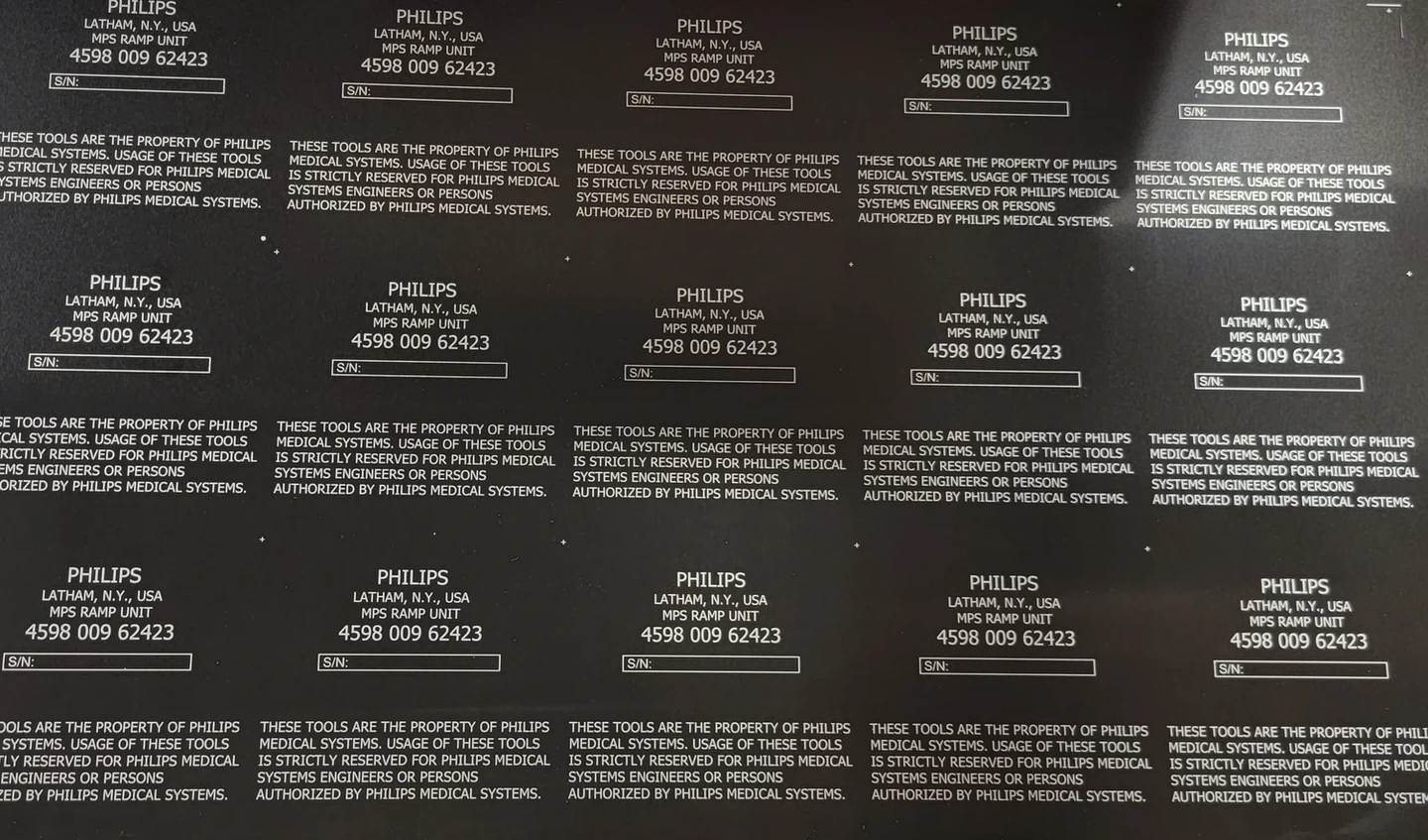
Repeated identification graphics on a PIC nameplate sheet.
Work with PIC
Start your military nameplate or tag project
A nameplate inquiry can start with:
- Your plate drawing, specification revision and quantity
- Any applicable specification sheet and type
- Material, thickness and mounting details
The artwork should show the colors, finish, fixed text and any serial or barcode fields. Equipment use and cleaning conditions, along with required inspection or acceptance records, are also part of the project requirements.