
Military equipment identification
Mil-spec nameplates, labels & decals
PIC makes nameplates, labels and decals for military equipment identification. From photosensitive aluminum plates to adhesive-backed foil and marking films, we help you match the product to your drawing and application.
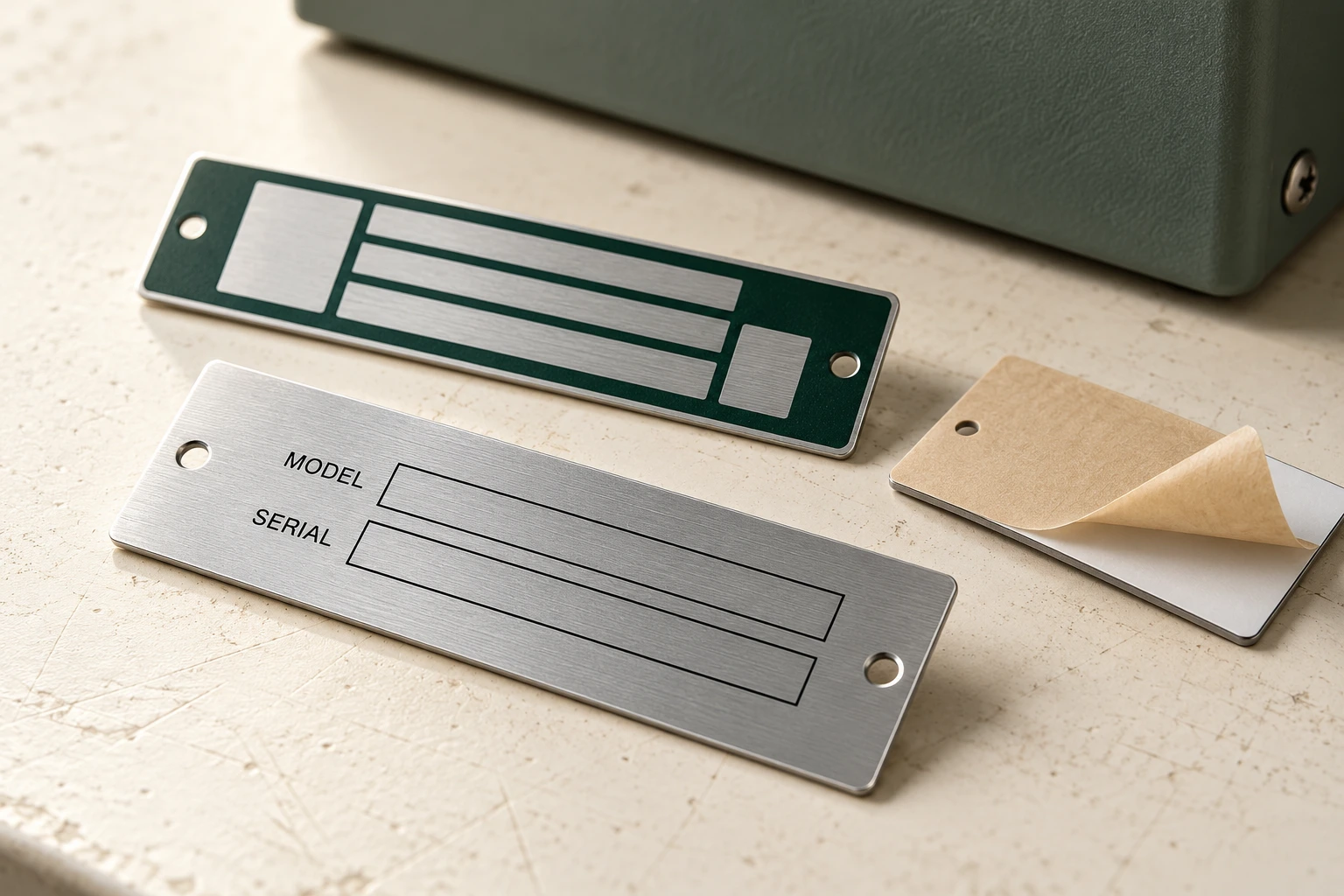
- Metal nameplates and tags for equipment identification
- Adhesive-backed foil plates for low-profile marking
- Marking films for legends, characters and symbols
Custom identification for equipment, components and instruction panels.
Equipment identification • PIC
Nameplates, foil plates & marking films
Nameplates, foil plates & marking films
Find the mil-spec product your project needs
Use the specification on your drawing to explore the relevant product. MIL-DTL-15024, MIL-DTL-19834 and MIL-DTL-43719 cover different forms of identification, rather than successive levels of durability.
01
Plates & tags
MIL-DTL-15024
Nameplates and tags for equipment identification, ratings and instructions. Explore marking methods, mounting options and Type H photosensitive anodized aluminum.
02
Adhesive-backed metal foil
MIL-DTL-19834
Thin aluminum plates that carry identification or instructions without a thick plate profile. Review the foil construction and Type I and Type II adhesive requirements.
03
Marking films & markers
MIL-DTL-43719
Pigmented elastomeric marking films for letters, numbers, legends and symbols. Explore rolls, sheets and finished markers, including permanent and temporary classes.
Some drawings connect these specifications: MIL-DTL-15024G Type G can reference foil plates under MIL-DTL-19834. The complete drawing requirement determines which provisions apply.
Additional specifications
MIL-P-6906B — Aircraft identification plates
Aircraft identification plates for instruments, accessories and aircraft equipment, made around the required information, dimensions and attachment. MIL-P-6906B is inactive; it can still appear on existing contracts and drawings.
MIL-STD-13231 — Marking of electronic items
Labels and nameplates for electronic-item identification, with the information and construction suited to the specified application. MIL-STD-13231 superseded MIL-M-13231 and covers item marking; shipment marking is a separate requirement.
MIL-DTL-21981 — Electronic-equipment identification plates
Electronic-equipment nameplates carrying approved nomenclature and serial-number information. PIC produces the plate; government naming, serial-number assignment and drawing approvals remain with the responsible parties.
MIL-P-38477A — Aerospace identification materials
Adhesive-backed plastic identification and marking materials for legacy aerospace drawings. MIL-P-38477A is cancelled and was superseded by A-A-59485; any substitution requires the appropriate customer or contract approval.
MIL-DTL-43994 — Reflective identification and hazard markers
Reflective identification, fire, chemical-hazard and restricted-area markers on pressure-sensitive retroreflective sheeting, with the marker type and finished construction matched to the project requirements.
Related ASTM standards
ASTM D4956 — Retroreflective sheeting for traffic graphics
Printed traffic-sign graphics, delineator graphics and barricade markings using the specified retroreflective sheeting. ASTM D4956 covers the sheeting; it does not by itself establish compliance of inks, printing, overlays or the complete installed sign.
ASTM E2072-24 — Photoluminescent safety markings
Photoluminescent labels and graphics for supplemental escape-route guidance, emergency-equipment identification and obstructions along an escape route. The standard addresses newly applied markings; the specified activation and luminance requirements apply to the selected marking system and project conditions.
Legends, serial numbers & barcodes
Put the right information on your military nameplate or label
PIC prints equipment legends, variable serial numbers and barcode graphics. Your approved artwork and data tell us what each part needs to carry, including fields that change from one label to the next.
A drawing may reference a material specification alongside a marking standard. MIL-STD-130 addresses item identification, including readable text and machine-readable codes. MIL-STD-129 addresses markings for shipment and storage.
Barcode quality verification and UID registration are separate requirements when needed. Printing a Data Matrix code does not include those services automatically.
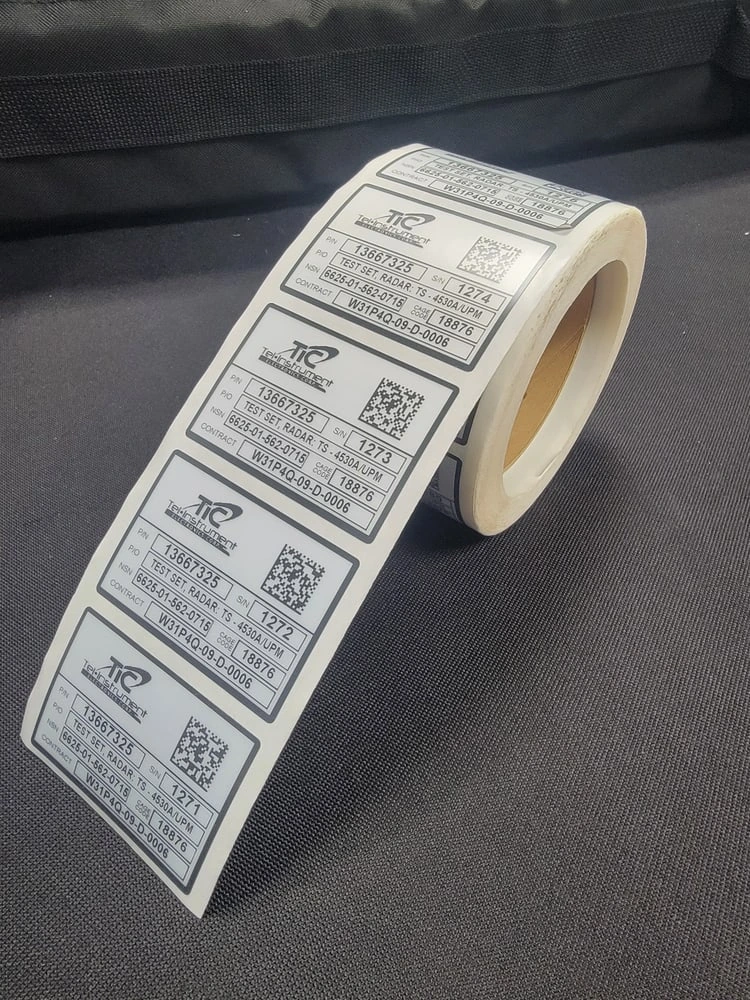
Serial numbers and other identification fields on a PIC label roll.
PIC printing & finishing
Nameplates and labels made for the application
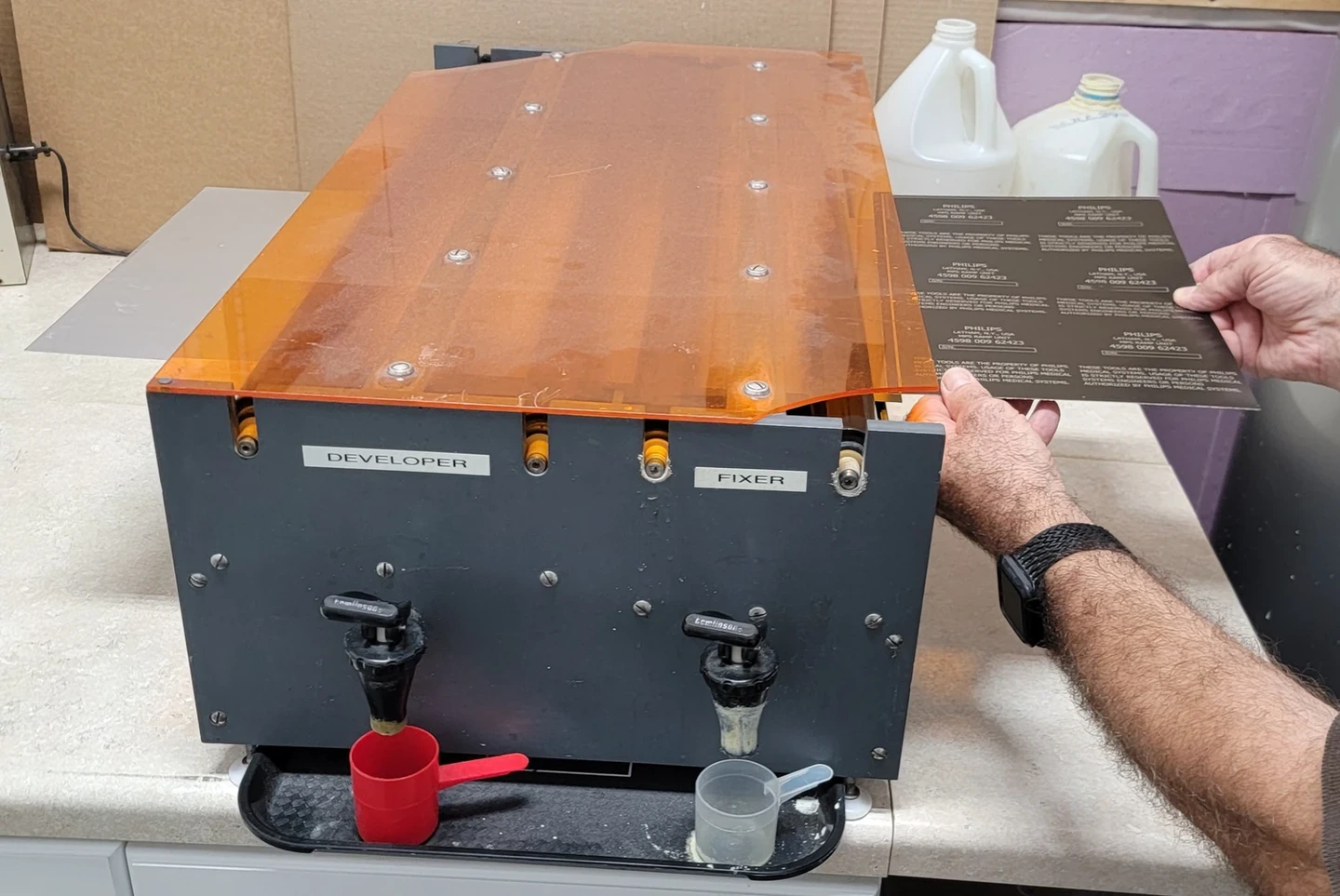
PIC processes and seals Metalphoto aluminum, screen prints and digitally prints graphics, and cuts and finishes identification parts. These in-house services support detailed diagrams, small text, custom shapes and mounting features.
Where the part will be used helps determine the material and attachment. Relevant exposures include sunlight, abrasion, cleaners and other fluids the marking will encounter. For example, MIL-DTL-15024 Type E surface-printed plates are intended for protected areas.
For adhesive mounting, the equipment coating and surface condition affect the bond. For mechanical mounting, the drawing needs to account for holes, fasteners and corrosion that can occur between dissimilar metals.
Metalphoto processing at PIC.
Current records & existing drawings
Which mil-spec revision applies to your order?
We review the designation and revision on your drawing, including older MIL-P and MIL-M references. A newer revision does not automatically replace the version required by your contract.
DLA records checked October 11, 2026 list all three specifications as active. The separate QPL-19834 qualified products list was canceled in 2003; MIL-DTL-19834 remains active.
From the drawing to the finished part
Include the inspection and records your order requires
The complete part
The specified material, printing, adhesive, finish and mounting requirements apply to the finished nameplate or marker.
Inspection requirements
The applicable specification and order documents determine the inspections, including whether first-article inspection is required.
Required records
PIC needs to confirm any requirements for test reports, material traceability or a certificate of conformance before accepting the order.
A material datasheet helps identify the starting material. It does not establish that the finished part meets every requirement of the order.
Work with PIC
Let’s discuss your equipment identification
Useful details for your mil-spec inquiry include:
- Your drawing, required specification and revision
- Quantity and required date
- Type, class or supplied form, if specified
- Artwork and any variable-data requirements
- A photo of the mounting surface, if available
- Any packaging requirements
Where the part will be used, along with any required inspection or documentation, helps define the project. For restricted technical data, an appropriate transfer method needs to be discussed with PIC before files are sent.